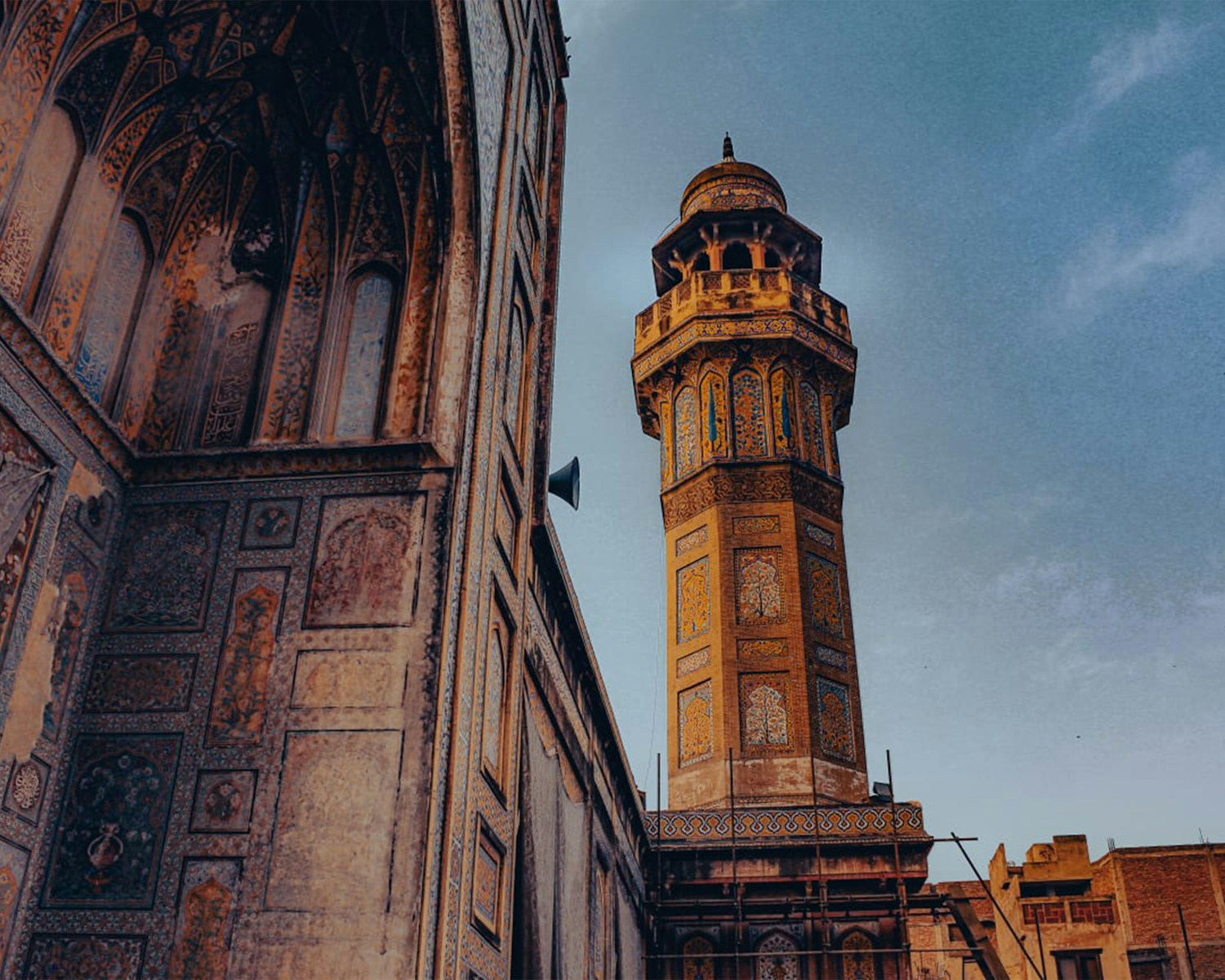
If Islamabad is the mind of Pakistan, Lahore is undoubtedly its heart—a heart that beats loudest within the 13 ancient gates of the Walled City (Androon Sheher). To walk through the Delhi Gate at sunrise is to leave the 21st century behind. Here, the air is a thick, intoxicating blend of sandalwood incense, old parchment, and the sharp sizzle of spiced oil from nearby breakfast stalls.
As you navigate the labyrinthine alleys, the Wazir Khan Mosque suddenly reveals itself like a jewel box left open. Built during the reign of Emperor Shah Jahan, it is often called the “Cheek-Mole on the Face of Lahore.” Every square inch of its brickwork is covered in kashi-kari (intricate tile mosaics) that depict floral paradises and celestial geometries. The sunlight hitting these tiles creates a kaleidoscopic glow that hasn’t dimmed in four centuries.
Beyond the Mosque: The Life of the Streets
- The Spice Markets: Just a stone’s throw away is Akbari Mandi, one of the largest spice markets in Asia. The scents of turmeric, dried chilies, and saffron are so potent they physically tingle on your skin.
- The Jharokas: Look up. The architecture here is vertical. Ancient wooden balconies (jharokas) hang over the streets, once used by residents to observe the hustle and bustle below while remaining hidden from view.
- The Food Ritual: No morning in the Walled City is complete without a stop at a street-side dhaba. Join the locals for Lahori Chana (slow-cooked chickpeas) and massive, buttery Kulcha bread, eaten right there on the sidewalk as the city wakes up.
Travel Tip: Don’t use a map. The joy of the Walled City is in getting lost. Every dead-end alley usually leads to a beautiful carved door or a friendly local offering a cup of tea.
Leave a Reply